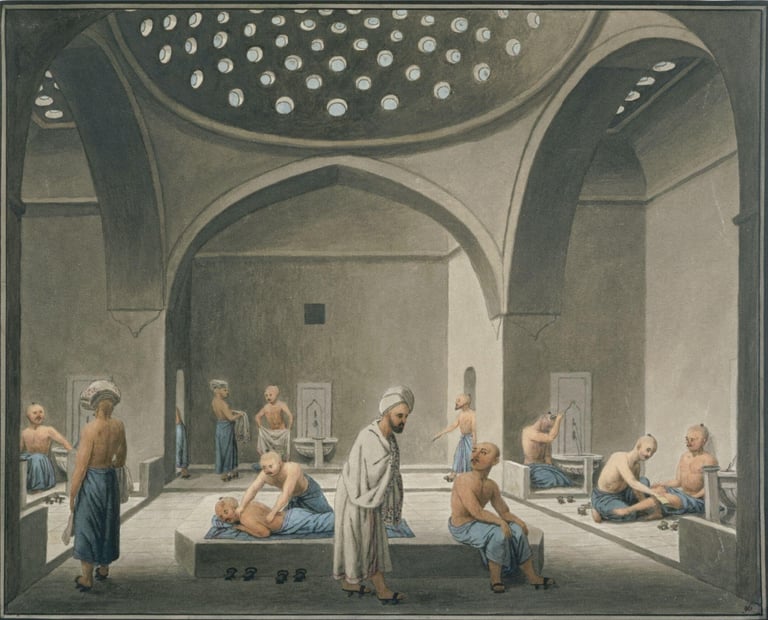
The Primordial Spark: Beyond Rome (Ancient Greece & The Gymnasion)
The story of the Hammam began with fire and sweat long before it met marble. While the Romans brought the luxury and engineering of bathing to its zenith, the core philosophy first took root in Ancient Greece.
The Birth of Steam
The Greeks used circular chambers known as Laconicum. A brazier (or heated stones) was placed in the center, and water was poured over it to produce dry steam.
Material and Craft
During this era, the vast marble quarries and the massive labor force of Rome did not yet dominate construction. Greeks primarily used limestone, terracotta, and local stone. Marble was reserved for the fine arts and sculpture rather than structural masonry.
Gymnasion and Balaneia
In Ancient Greece, baths were not standalone structures but an integral part of athletic arenas called Gymnasions. After training, athletes would coat their bodies in olive oil, dust themselves with sand, and then scrape this layer off with a curved metal tool called a strigil. This is the most primitive form of today's "Kese" (exfoliation) ritual.
The Engineering Revolution: Rome’s Marble Empire
With the rise of Rome, the bath evolved from "post-athletic cleaning" into a "Social Cathedral"—a grand display of imperial power and sophisticated engineering.
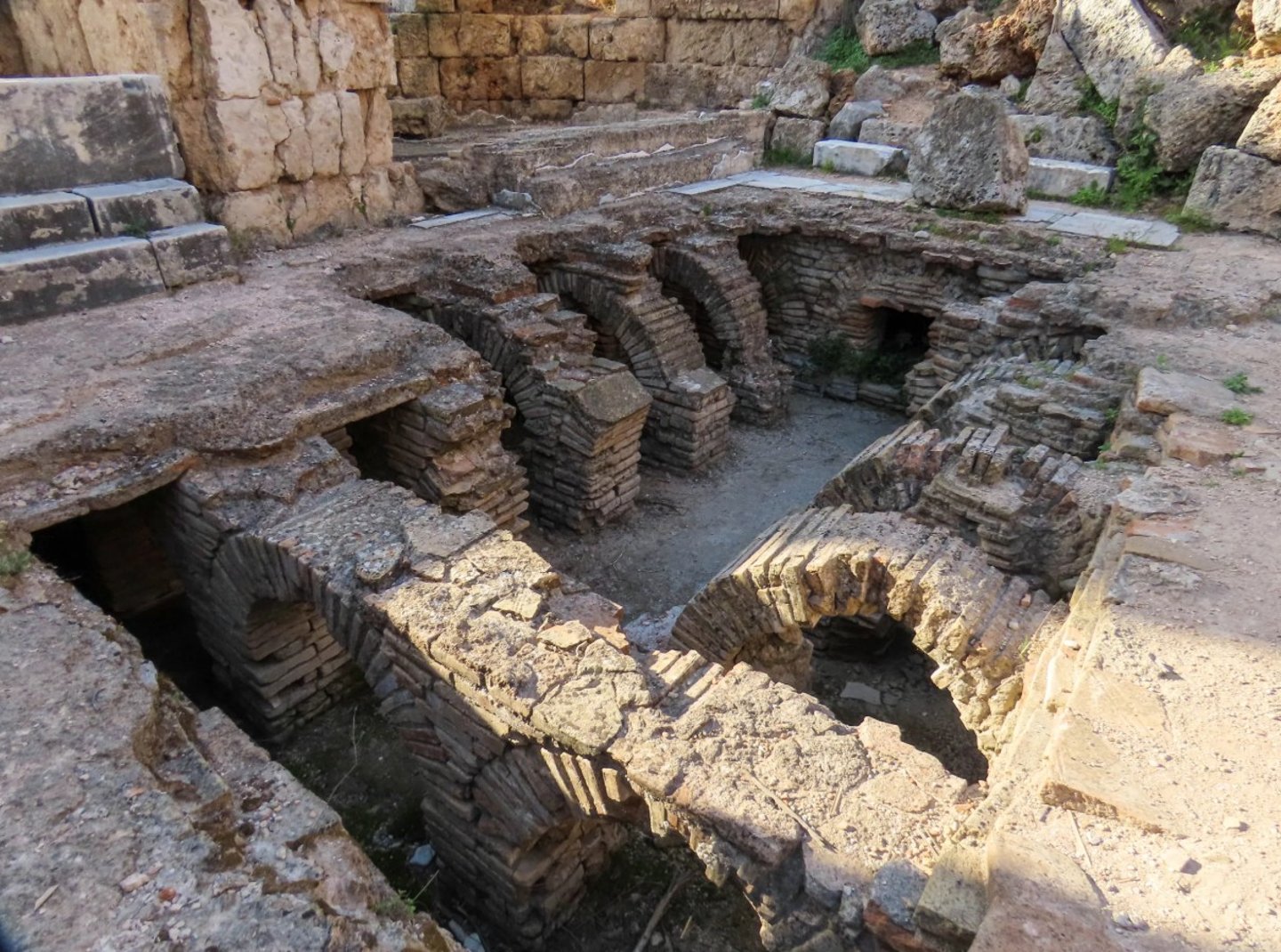
This was the true Roman revolution. They constructed the bath floors on small brick pillars called pilae. Hot air from a furnace (Praefurnium) circulated between these pillars and through tile pipes (Tubuli) inside the walls, turning the entire building into a massive radiator. This 2,000-year-old Roman genius survived through the centuries.
Hypocaust (Underfloor Heating)
The Reign of Marble
Under Rome, marble became the Hammam’s soul. It was more than a status symbol; it was the most hygienic material, capable of retaining heat for long periods and emitting radiant energy.
From Roman Pools to the Turkish Göbektaşı
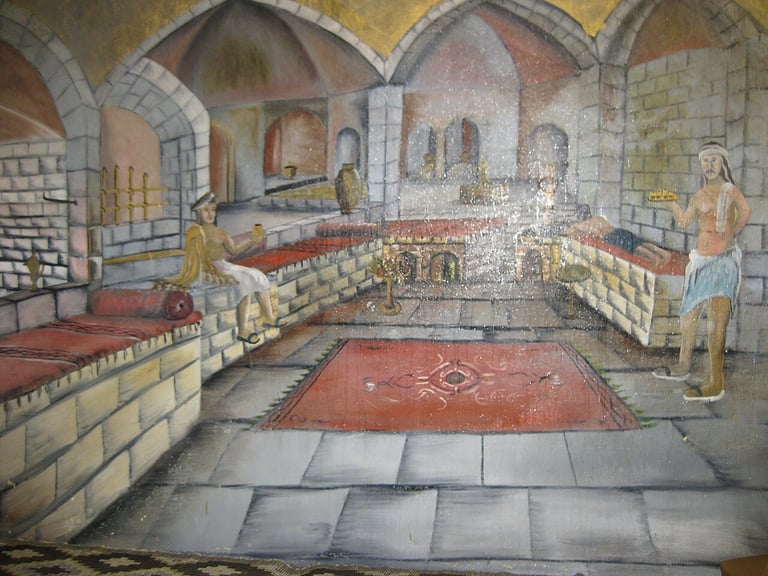
The Turkish Hammam is not merely a continuation of the past; it is a profound architectural and philosophical revolution. While its roots draw from the bathing traditions of Ancient Rome and Byzantium, the Hammam as we know it today was born from the synthesis of these ancient structures with the nomadic steam-bath culture of Central Asian Turks. Upon their arrival in Anatolia in the 11th century, Turks refined this practice, reaching a pinnacle of sophistication during the Ottoman Empire.


The Great Shift: Standing Water vs. Flowing Water
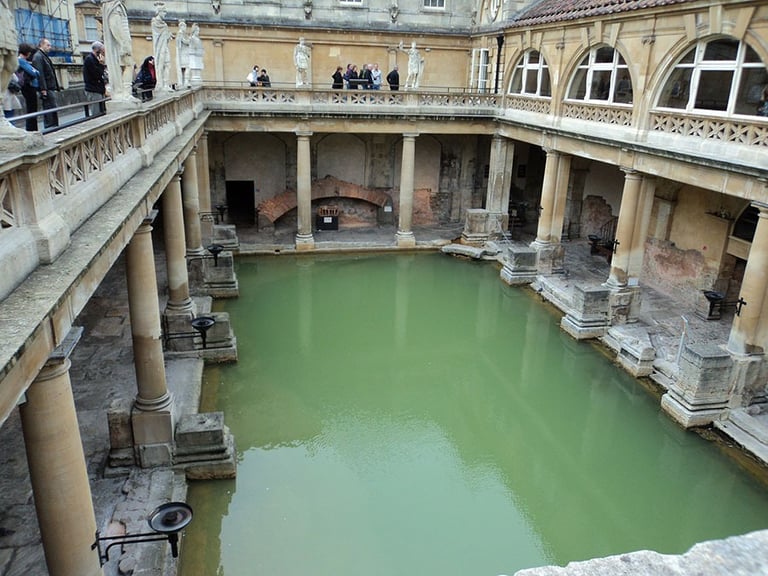
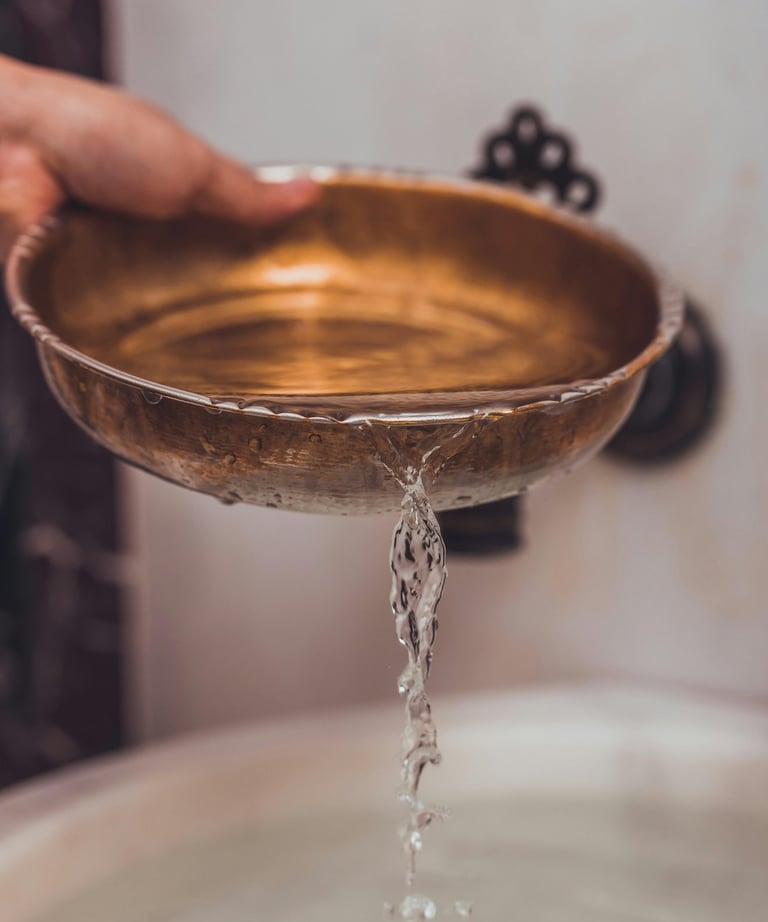
The most significant distinction between a Roman Bath and a Turkish Hammam lies in the concept of purity. In Roman culture, the "Thermae" centered around large communal pools (piscina) where bathers submerged themselves together.
However, in Turkish and Islamic tradition, cleanliness is only achieved through flowing water. Static or "standing" water was perceived to harbor impurities. This cultural and spiritual need for constant purification led to a radical architectural revision: The pools were removed, and the Roman bath was reborn as the Turkish Hammam.
When the pools were eliminated, the central space of the bath was replaced by a masterpiece of engineering: the Göbektaşı (The Navel Stone).
The Steps of the Authentic Turkish Hammam Ritual
Kese (The Traditional Exfoliation)
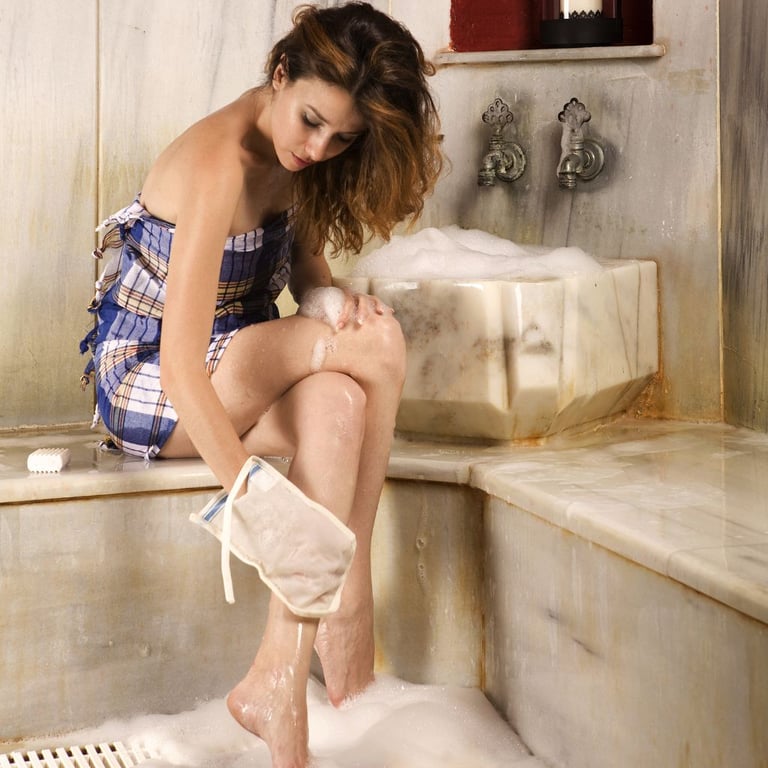
The most essential and effective stage of the Hammam. After sweating on the Göbektaşı to open your pores, a traditional silk mitt (kese) is used to remove dead skin cells. Your skin begins to breathe, and blood circulation is instantly revitalized. Regenerates skin, flushes toxins, and boosts the immune system.
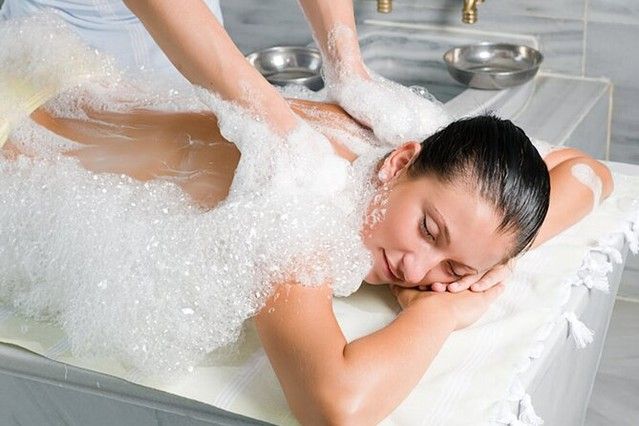
Foam Massage
After exfoliation, your body is enveloped in a dense, white cloud of foam made from pure olive oil soap. Performed by master hands, this massage relaxes the muscles and provides a deep sense of tranquility. Relieves muscle tension, reduces stress, and leaves the skin silky smooth.
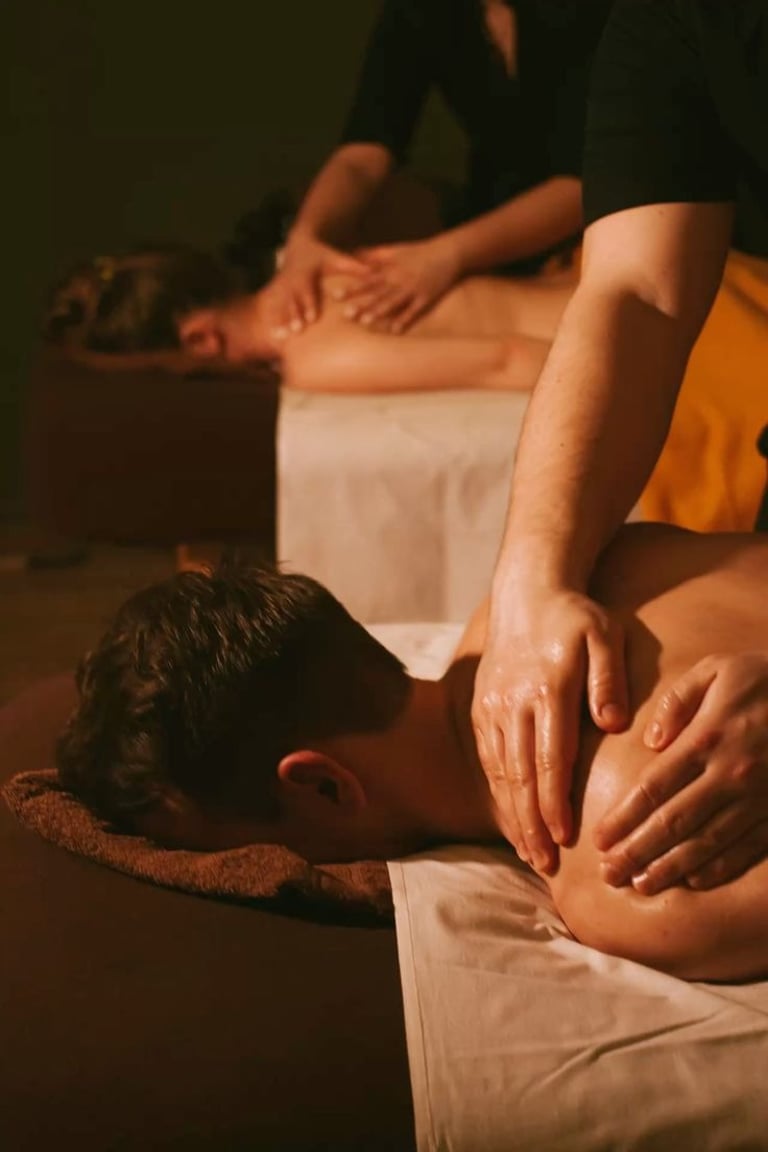
The most luxurious finale of the ritual. After exiting the steam, your body is deeply hydrated and "sealed" with a massage using special herbal extracts and aromatic healing oils. Provides long-lasting hydration, increases spiritual stillness, and balances body energy.
Oil Massage
Engineering the Atmosphere: 300 Living Monuments
Today, Istanbul is home to more than 300 historic hammams. From the grand masterpieces designed by the legendary Architect Sinan to hidden neighborhood gems, these 300 structures stand as living proof of a culture that chose the movement of water and the warmth of stone over the stillness of the pool.
When you step into a Turkish Hammam, you are not just taking a bath. You are participating in a 500-year-old rejection of the "static" in favor of the "pure." It is a journey of renewal that has been perfected over half a millennium, designed to cleanse not just the skin, but the soul.